A compassionate legal advocate, Steve Hymowitz is known for his "never let up" approach to justice. He focuses on being a steady resource for clients, ensuring their voices are heard and their rights protected.
Table of Contents
In New York City's complex nursing home litigation landscape, families need more than aggressive marketing — they need proven advocates with the professional standing to take on powerful healthcare corporations.
When negligence occurs in NYC nursing homes, the aftermath extends beyond medical bills and emotional trauma. Families face corporate legal teams, insurance investigators, and facility administrators trained to minimize liability. In this high-stakes environment, the attorney you choose can determine whether justice is served or swept aside.
Fellows Hymowitz Rice stands apart in the NYC nursing home negligence field, not through volume claims or flashy advertisements, but through demonstrated professional excellence and genuine commitment to elder care protection.
Professional Leadership That Commands Respect
Robert L. Fellows currently holds the most significant professional distinction available to New York attorneys: he served as President of the Rockland County Bar Association. This position represents far more than a title — it reflects peer recognition from hundreds of practicing attorneys who selected Rob to lead their professional community.
Bar association leadership requires demonstrated competence, ethical integrity, and the respect of fellow legal professionals. Insurance companies and opposing counsel recognize this distinction immediately. They know they're dealing with an attorney whose reputation precedes any discussion of the case.
This professional standing translates directly to client benefit. When Rob Fellows enters settlement negotiations, his credibility as a bar leader often facilitates more productive discussions than that of attorneys without institutional recognition.
Beyond his bar presidency, Rob maintains:
- New York Metropolitan Area Super Lawyer designation spanning over a decade (2013-2024).
- Martindale Hubbell AV rating (4.9), representing peer evaluation of legal ability and ethical standards.
- Active membership in the American Association for Justice and the New York State Trial Lawyers Association.
The Nursing Home Crisis in New York
The numbers tell a sobering story about the quality of nursing home care across New York State. Recent data reveal that 42% of the state's 603 Medicare-certified nursing homes score below average in federal quality assessments. More alarming still, a comprehensive study by the New York Attorney General found that 98% of surveyed facilities fail to meet federal nurse staffing recommendations.
This systemic understaffing directly contributes to preventable injuries:
- Pressure ulcers develop when residents aren't repositioned every two hours.
- Medication errors increase when nurse-to-patient ratios exceed safe levels.
- Fall injuries multiply when adequate supervision isn't available.
- Infections spread when proper hygiene protocols can't be maintained.
NYC facilities face particular challenges due to high operational costs, competitive staffing markets, and aging infrastructure. Many are owned by private equity firms focused on profit maximization rather than care quality, creating inherent conflicts between financial objectives and patient safety.
The Unique Challenges of Nursing Home Negligence Cases

Unlike standard personal injury claims, nursing home negligence cases involve multiple overlapping legal and medical complexities that require advanced legal knowledge and skill:
Regulatory Complexities
Nursing homes operate under federal Medicare regulations, state health department oversight, and local safety requirements. Violations of any regulatory standard can establish liability, but identifying which standards apply to specific situations requires extensive knowledge of:
- Centers for Medicare & Medicaid Services (CMS) conditions of participation.
- New York Public Health Law provisions specific to long-term care.
- Federal Nursing Home Reform Act requirements.
- State inspection protocols and citation procedures.
Medical Causation Challenges
Elderly nursing home residents typically present with multiple comorbidities that complicate injury causation analysis. Proving that the facility's negligence, rather than underlying medical conditions, caused specific harm requires sophisticated medical expertise.
For example, a Stage IV pressure ulcer in a diabetic resident with circulatory problems requires analysis of:
- Baseline skin integrity assessments
- Turning and positioning documentation
- Nutritional status monitoring
- Wound care protocols and implementation
- Medical device management procedures
Corporate Liability Structures
Modern nursing homes frequently operate through complex business arrangements designed to limit liability exposure. Successful claims often require piercing corporate veils to reach entities with meaningful assets and insurance coverage.
These structures commonly include:
- Management companies that control operations but claim limited ownership.
- Property holding companies that lease facilities to operating entities.
- Staffing agencies that provide personnel under independent contractor agreements.
- Parent corporations that maintain assets while subsidiaries face liability.
Common Forms of Nursing Home Negligence We Address

Pressure Ulcer Development and Progression
Stage III and IV pressure ulcers represent the most common nursing home negligence claims because they're largely preventable with proper care protocols. These wounds often require extensive medical intervention, including:
- Surgical debridement of necrotic tissue
- Long-term wound vacuum therapy
- Nutritional support for healing
- Infection management and monitoring
- Pain management throughout treatment
Recent New York verdicts in pressure ulcer cases have ranged from $500,000 for Stage III ulcers to over $2 million for Stage IV ulcers causing systemic complications or death.
Medication Management Failures
Complex medication regimens common in nursing home settings create numerous opportunities for dangerous errors. Polypharmacy complications, drug interactions, and administration mistakes can cause:
- Hypoglycemic episodes from insulin errors
- Cardiovascular events from blood pressure medication mistakes
- Cognitive changes from psychotropic drug mismanagement
- Bleeding complications from anticoagulant errors
- Respiratory depression from opioid overdoses
Nutritional Neglect and Dehydration
Unintended weight loss exceeding 5% in one month or 10% in six months triggers federal reporting requirements and often indicates systematic care failures. Severe malnutrition and dehydration can lead to:
- Electrolyte imbalances causing cardiac arrhythmias
- Kidney dysfunction requiring emergency intervention
- Immune system compromise increasing infection risk
- Delayed wound healing and skin breakdown
- Cognitive decline and behavioral changes
Fall Prevention Failures
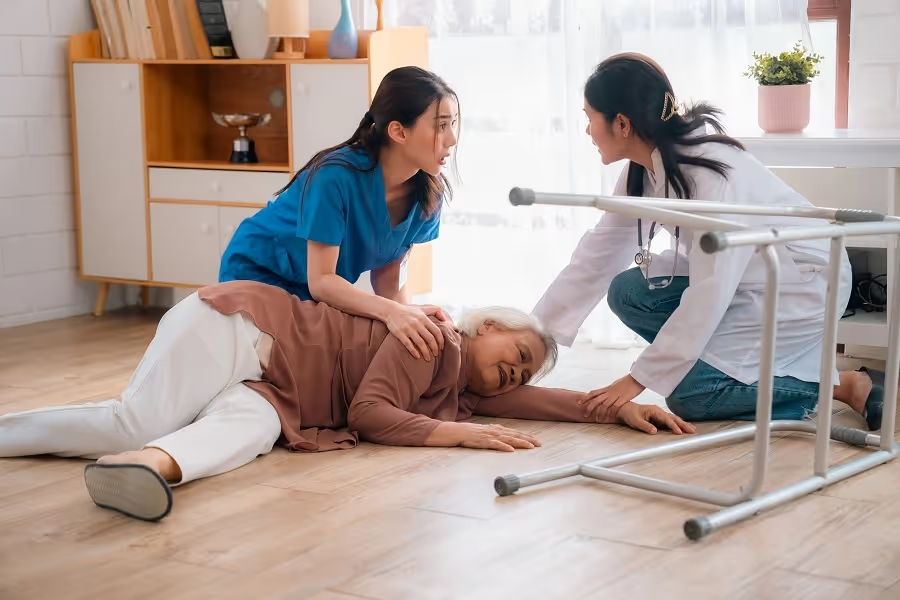
Hip fractures in nursing home residents carry mortality rates approaching 25% within one year. Preventable falls often result from:
- Inadequate fall risk assessments
- Improper use of mobility assistive devices
- Environmental hazards left unaddressed
- Insufficient supervision during transfers
- Failure to implement individualized fall prevention plans
Choking and Aspiration Prevention Breakdown
Residents requiring modified diets face significant risks when facilities fail to follow speech therapy recommendations. Choking incidents and aspiration pneumonia can be fatal complications of:
- Improper food texture modification
- Inadequate supervision during meals
- Failure to position residents correctly for eating
- Rushed feeding by understaffed personnel
- Ignoring speech pathologist dietary recommendations
Our Investigation and Case Development Process

Immediate Evidence Gathering
Time works against families in nursing home negligence cases because facilities routinely modify or destroy documentation after incidents occur. We immediately initiate:
- Formal records preservation requests to prevent document destruction.
- Photographic documentation of injuries and environmental conditions.
- Witness interviews before memories fade or staff turnover occurs.
- Medical expert consultations to preserve early opinions.
- Regulatory complaint filings to trigger official investigations.
Comprehensive Medical Record Analysis
Nursing home medical records often span hundreds of pages across multiple care episodes. Our review process identifies patterns of care failures that less experienced attorneys might miss:
- Gaps between assessment findings and care plan implementation.
- Documentation inconsistencies suggesting record alteration.
- Medication administration errors and monitoring failures.
- Staffing level inadequacies during critical care periods.
- Communication breakdowns between different care providers.
Expert Witness Team Assembly
Successful nursing home cases require credible expert testimony from professionals who understand long-term care standards. Our expert network includes:
- Board-certified geriatricians familiar with nursing home care standards.
- Registered nurses with long-term care administration experience.
- Wound care specialists certified in pressure ulcer management.
- Pharmacists experienced in geriatric medication management.
- Healthcare economists who can calculate future care costs.
Facility Operations Investigation
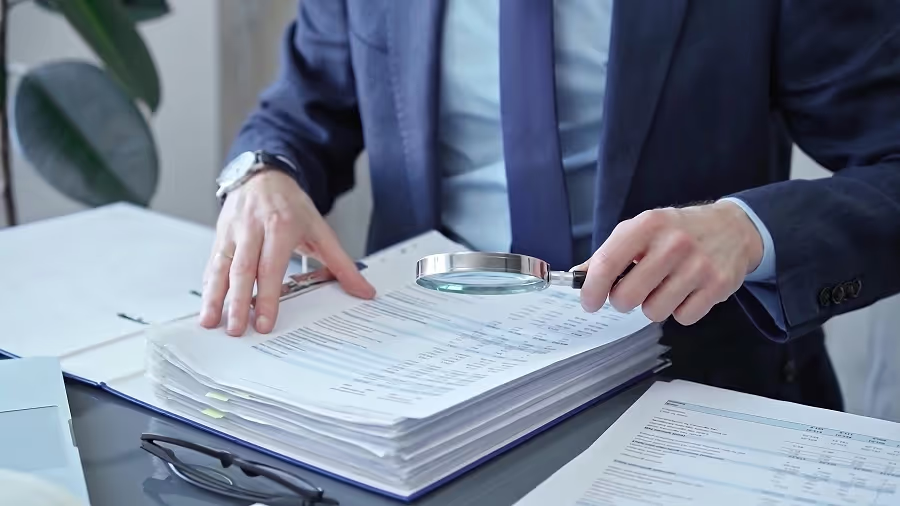
Understanding how specific facilities operate reveals systematic problems that contribute to individual incidents. Our investigation typically examines:
- Staffing patterns and turnover rates.
- Training programs and competency assessments.
- Quality assurance protocols and compliance monitoring.
- Previous inspection citations and corrective action plans.
- Corporate ownership structures and financial arrangements.
Why the Rockland County Connection Strengthens NYC Cases
Some families question whether a Rockland County-based firm can effectively handle NYC nursing home cases. Our geographic position actually provides strategic advantages:
Fresh Perspective on Urban Healthcare Issues
Attorneys based exclusively in Manhattan often become desensitized to systemic problems plaguing urban healthcare facilities. Our outside perspective helps identify opportunities that local practitioners might overlook through familiarity.
Reduced Caseload Allows Individual Attention
Unlike high-volume Manhattan firms handling hundreds of simultaneous cases, our selective practice model ensures that each nursing home negligence case receives the focused attention these complex matters require.
Multi-Jurisdictional Experience

Many nursing home cases involve interstate transfers, multi-county medical care, or residents from various locations. Our practice across the greater metropolitan area provides familiarity with different court systems and medical facilities that purely local firms may lack.
Cost-Effective Operations Benefit Clients
Lower overhead costs in Rockland County allow us to invest more resources in case investigation, expert witnesses, and trial preparation rather than expensive Manhattan real estate.
Current Regulatory Environment and Its Impact
Federal Staffing Standards Development
The Centers for Medicare & Medicaid Services recently proposed minimum staffing requirements that would mandate specific nurse-to-resident ratios. Facilities failing to meet these standards may face increased liability for understaffing-related injuries.
State-Level Enforcement Increases
New York Attorney General Letitia James has prioritized nursing home oversight, resulting in major enforcement actions like the recent $8.6 million settlement with Fulton Commons Care Center for systematic neglect and fraud.
Post-COVID Operational Changes
The pandemic exposed widespread deficiencies in nursing home infection control, emergency preparedness, and staffing resilience. Many facilities continue operating with reduced staff and inadequate protocols, creating ongoing liability risks.
The Consultation Process: What to Expect
Initial contact and case assessment when you contact Fellows Hymowitz Rice about potential nursing home negligence, we provide immediate attention to time-sensitive issues:
- Free consultation within 24 hours of initial contact.
- Emergency evidence preservation when immediate action is required.
- Medical record review to identify obvious signs of negligent care.
- Preliminary case strength assessment based on available information.
- Clear explanation of legal options and potential recovery scenarios.
Investigation and case development if we determine your case has merit, our investigation process includes:
- Comprehensive medical record analysis by experienced attorneys and medical consultants.
- Expert medical witness consultation to establish care standard violations.
- Facility operation investigation to identify systematic problems.
- Damage calculation based on economic losses and non-economic harm.
- Settlement strategy development or trial preparation, as circumstances require.
Ongoing client communication throughout the legal process, we maintain regular contact through:
- Monthly case updates on investigation progress and legal developments.
- Immediate notification of significant case developments or settlement opportunities.
- Detailed explanation of complex medical and legal issues affecting your case.
- Accessibility for questions or concerns as they arise.
- Transparent discussion of case strengths, weaknesses, and realistic expectations.
Taking the Next Step: Protecting Your Family's Rights

If you believe your loved one has suffered harm due to nursing home negligence, immediate action is essential to preserve your legal rights and prevent evidence destruction.
Document current conditions:
- Photograph visible injuries, including pressure ulcers, bruises, or other signs of neglect.
- Keep detailed notes of conversations with facility staff, administrators, and medical providers.
- Maintain copies of all medical records, care plans, and incident reports provided by the facility.
- Record dates and circumstances of any concerning incidents or care quality changes.
Ensure appropriate medical care:
- Seek evaluation from physicians outside the negligent facility to assess the extent of injury.
- Follow through with recommended treatments to optimize your loved one's recovery.
- Document all additional expenses incurred due to facility negligence.
- Keep receipts for transportation, medical care, and other incident-related costs.
Contact Experienced Legal Counsel. Nursing home negligence cases require advanced legal knowledge that general practice attorneys lack. The complex regulatory environment, medical causation issues, and corporate liability structures demand focused, advanced knowledge and skill.
Fellows Hymowitz Rice offers free consultations to families concerned about the quality of nursing home care. Our evaluation process determines whether negligence occurred and whether pursuing legal action is in your family's interests.
Call us today to schedule your confidential consultation. You can also reach us through our online contact form for immediate response to urgent situations.

Steven R. Hymowitz
Discuss your case
Or Call Us 24/7
(845) 639-9300