
Bridge painting is one of the most punishing jobs in the construction trades. When something goes wrong hundreds of feet above a river or highway, the results are rarely minor. Fellows Hymowitz Rice has spent over 40 years fighting for injured workers across Rockland County and New York State, recovering hundreds of millions of dollars for clients hurt on the job.
As a New City bridge painting accidents lawyer team, we understand the suspended scaffolds, containment systems, and toxic coatings unique to this work. We know how to hold negligent contractors, owners, and equipment suppliers accountable when a worker gets hurt.

Unlike most construction jobs, bridge painting combines extreme heights, unstable rigging, and hazardous materials all in one task. Understanding the specific dangers helps explain why claims in this field require an attorney who knows the trade.
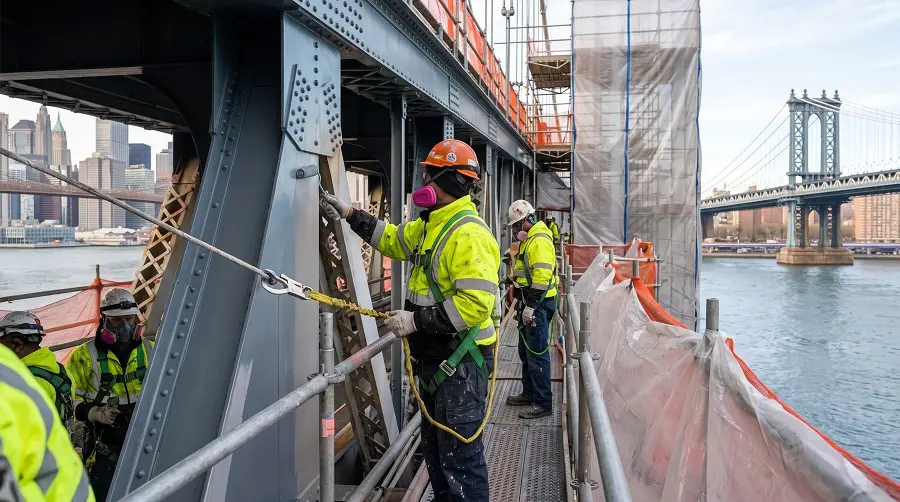
Bridge painters often work from two-point suspension scaffolds, catenary platforms, or chain-link containment systems hung by cables. OSHA requires that hardware support six times the maximum intended load, with pre-shift inspection of wire-rope clips.
A single frayed support rope can be enough to collapse a suspended scaffold and send a worker falling hundreds of feet, as documented in a New Jersey Department of Health workplace fatality investigation.
Many older steel bridges in New York were coated with high-lead paint. Scraping, sanding, or blasting that coating during repainting sends lead particles into the air.
OSHA's lead standard, 29 CFR 1926.62, caps exposure at 50 micrograms per cubic meter of air and requires proper respirators and medical monitoring. The CDC has documented bridge crews poisoned after being issued the wrong respirator cartridges on projects where the paint was nearly a third lead by weight.
Bridge crews often work directly above active roadways, rail lines, or waterways, adding struck-by accidents, drowning, and entrapment to the list of dangers. Weather and limited emergency access make rescue harder than on a standard job site.
Call our office today for a free, no-obligation consultation with a New City bridge painting accidents attorney who understands this trade.

Because bridge painting combines elevated falls with chemical exposure, our clients often present with more than one type of injury at once.
The steps you take right after an accident can directly affect your ability to recover full compensation later.
Call 911 immediately. Falls from height and lead exposure can both cause internal injuries that are not obvious right away, so a full medical evaluation is essential even if you feel able to keep working.
Notify your supervisor and make sure the accident is documented in an official incident report. If the injury is serious, you must also report it to OSHA.
Photograph the scaffold, rigging, containment system, and any visible injuries. Ask coworkers who witnessed the accident for their contact information, since eyewitness testimony is often critical in rigging failure cases.
Scaffold inspection logs, rigging certifications, and lead exposure monitoring records can reveal whether a contractor cut corners before your accident occurred.
Insurance adjusters and contractors' representatives may contact you quickly after an accident. Speak with a New City bridge painting accident lawyer first so nothing you say is later used to minimize your claim.
New York has some of the strongest worker protection statutes in the country for elevation-related construction work, and bridge painting falls squarely within their coverage. Here's how the main protections apply to a bridge painting claim.
Labor Law Section 240 places strict liability on property owners and general contractors when a worker is injured in a gravity-related accident, such as a fall from a suspended scaffold or being struck by a falling object. Under this statute, a bridge painter who falls due to inadequate safety devices can recover damages regardless of comparative fault.
Labor Law Section 241 requires owners and contractors to follow specific safety standards across construction sites, including bridge rehabilitation projects.
Unlike a Section 240 claim, a Section 241(6) claim can be reduced based on the worker's own share of fault, so identifying which statute applies to your accident can significantly change your recovery.
Federal law governs all construction work involving lead exposure, including lead paint abatement and repainting of bridges and steel structures.
A contractor's failure to follow this standard, whether by skipping exposure monitoring or failing to provide adequate respiratory protection, can support a negligence claim in addition to any workers' compensation benefits.
If your employer carries workers' compensation insurance, you generally cannot sue them directly, but you can still pursue a third-party lawsuit against a property owner, general contractor, or equipment supplier whose negligence contributed to your accident. A New City bridge painting accidents attorney can help you identify every source of compensation available.
Multiple parties along a bridge repainting project may share responsibility for a worker's injuries.
New York generally allows three years from the date of an accident to file a personal injury lawsuit. Wrongful death claims carry a two-year deadline, and claims against a government-owned bridge or municipal agency must typically be filed within just 90 days.
Because state, county, or municipal agencies often own bridges, confirming the correct filing deadline with a bridge painting accidents lawyer as soon as possible is critical to protecting your right to compensation.
A successful claim can address both the immediate and long-term impact of a bridge painting accident.
Economic damages include emergency and ongoing medical treatment, lost wages, diminished future earning capacity, and out-of-pocket costs related to your recovery.
Non-economic damages cover pain and suffering, emotional distress, loss of enjoyment of life, and, in cases involving lead poisoning, compensation for the long-term neurological and physical effects of toxic exposure.
Wrongful death damages are available to surviving families and may include funeral expenses, lost financial support, and loss of companionship.
Winning a bridge painting accident case requires technical knowledge that goes well beyond a standard construction injury claim.
We work with rigging engineers, industrial hygienists, and accident reconstruction specialists to determine whether the scaffold, containment system, or lead safety protocols met required standards.
For clients exposed to lead paint, we bring in medical toxicologists to document blood lead levels, diagnose long-term health effects, and connect your exposure directly to the project you worked on.
We handle every conversation with insurance adjusters and defense attorneys so you can focus on recovery, and we prepare every case as though it is headed to trial from day one.

Our attorneys bring over 100 years of combined experience representing injured workers throughout Rockland County and New York State.

We regularly apply New York's Scaffold Law, Section 241, and federal OSHA regulations to secure compensation other firms overlook.

We represent bridge painting accident victims on a contingency fee basis, so there is no upfront cost and no risk in calling us.

You will work directly with an experienced trial lawyer who answers your questions and keeps you informed at every stage of your case.

Rob Fellows is more than just a lawyer; he's a seasoned advocate and a respected leader in the legal community. With over 40 years of experience, he's earned a reputation for meticulous preparation, unwavering advocacy, and a genuine commitment to his clients.












Steve Hymowitz is a champion for the underdog, specializing in medical malpractice and construction accident cases. He’s known for his warmth and unwavering dedication, relentlessly pursuing justice for those who feel powerless against insurance companies.





Matthew brings an unparalleled level of energy and drive to every case, earning a reputation for achieving exceptional results. He goes beyond financial wins, building deep connections with clients and becoming a trusted advisor during their most difficult times.


Joanne Horowitz is a skilled legal strategist and a strong advocate for those facing injuries due to negligence, construction accidents, and medical malpractice.

Margaret is a seasoned negotiator, expert in civil dispute resolution, with extensive experience handling homicide cases.

Jake is a dedicated, hardworking, and compassionate attorney with a unique perspective shaped by his experience representing both plaintiffs and defendants.
Fellows Hymowitz Rice represents injured bridge and construction workers throughout Rockland County, the Hudson Valley, New York City's five boroughs, and communities across New York State.

If you or a loved one was hurt in a bridge painting accident, contact our New City bridge painting accidents attorney team today for a free consultation. No fee unless we win.

Often, yes. Workers' compensation benefits do not prevent you from filing a third-party lawsuit against a property owner, general contractor, or equipment supplier whose negligence contributed to your accident. A New City bridge painting accidents lawyer can review your case to identify every available source of recovery.
Yes. Labor Law Section 240 applies to elevation-related work on bridges, including repainting and rehabilitation projects, when a worker falls because of inadequate safety devices, such as a defective scaffold or missing fall protection.
Lead poisoning symptoms can take time to appear. Under New York's discovery rule, the filing deadline for a related injury claim may run from when you discovered, or reasonably should have discovered, the exposure rather than from the date you worked on the project. Speak with an attorney promptly to protect your rights.
Case value depends on the severity of your injuries, your medical costs and lost income, and the strength of the evidence against the responsible parties. Cases involving permanent disability, lead poisoning, or wrongful death typically carry higher value.
Our team works with medical and safety experts to calculate the full scope of your damages before presenting a demand.
Claims against a government-owned bridge carry a much shorter filing window, often as little as 90 days from the date of the accident. Contact a bridge painting accidents attorney immediately if a government entity owns or manages the structure involved in your accident.
