

Rob Fellows es un reconocido abogado de lesiones personales con más de 40 años de experiencia. Como socio gerente de Fellows Hymowitz Rice, es conocido por su meticulosa preparación y su agresiva defensa en la sala del tribunal.
Tabla de contenido
We’ve all seen them now — cars without a driver! When these cars get in accidents, figuring out liability can be quite the challenge. After all, self-driving car accident liability is not the same as that of conventional car accident claims. Unlike traditional motor vehicle accidents, where liability typically falls on one of the human drivers, autonomous vehicle manufacturer liability may also come into play when automated systems fail or malfunction.
As autonomous vehicle technology becomes more prevalent on our roads, our exceptional car accident lawyers serving New York will clarify the nuances of autonomous vehicle liability and underscore how to protect the rights and interests of both drivers and victims of motor vehicle accidents.
Common Causes of Self-Driving Car Accidents

Most car accidents involving autonomous vehicles result from a combination of factors:
Technology Limitations
Current self-driving technology faces challenges with:
- Recognizing unexpected road conditions or construction zones
- Processing complex traffic scenarios beyond the system's programming
- Weather conditions that interfere with sensors and cameras
- Identifying pedestrians, cyclists, or unusual objects in the roadway
Research from the RAND Corporation suggests that while autonomous vehicles may reduce human error-related accidents, they introduce new categories of potential failures.
Human Error Factors
Despite advanced automation, human error remains a significant factor when:
- Drivers become over-reliant on automated systems and lose situational awareness
- Inadequate understanding of the system's limitations leads to inappropriate use
- Distracted driving occurs when operators assume the vehicle requires no attention
- Failure to properly maintain or update the vehicle's automated systems
Manufacturing Defects
Product liability issues may arise from:
- Sensor malfunctions that prevent proper environmental detection
- Software bugs that cause incorrect decision-making
- Hardware failures affecting critical safety systems
- Inadequate quality control during the manufacturing process
Who Can Be Held Liable in Self-Driving Vehicle Accidents?
Determining liability in distracted and autonomous vehicle accidents involves examining multiple potentially responsible parties:
Human Driver Liability
Even in vehicles equipped with self-driving technology, the human driver may bear personal liability when:
- They fail to monitor the driving environment as required
- The driver fails to take control when the automated system requests intervention
- Engaging in unsafe behavior while the vehicle operates in self-driving mode
- Misusing the autonomous vehicle technology contrary to the manufacturer's instructions
The human operator remains legally responsible for maintaining awareness and readiness to assume control, particularly in Level 1-3 automation systems.
Autonomous Vehicle Manufacturer Liability
Vehicle manufacturers may face strict liability or negligence claims when:
- Manufacturing defects affect the autonomous vehicle's safety systems
- Design flaws compromise the automated system's ability to navigate safely
- Inadequate safety regulations compliance leads to foreseeable risks
- Software developer errors result in system failures
Product liability laws may hold the car manufacturer responsible when their automated vehicles fail to meet consumer expectations for safety. These cases often require extensive investigation into the vehicle's sensors, artificial intelligence algorithms, and decision-making processes.
Software Developer and Technology Company Liability
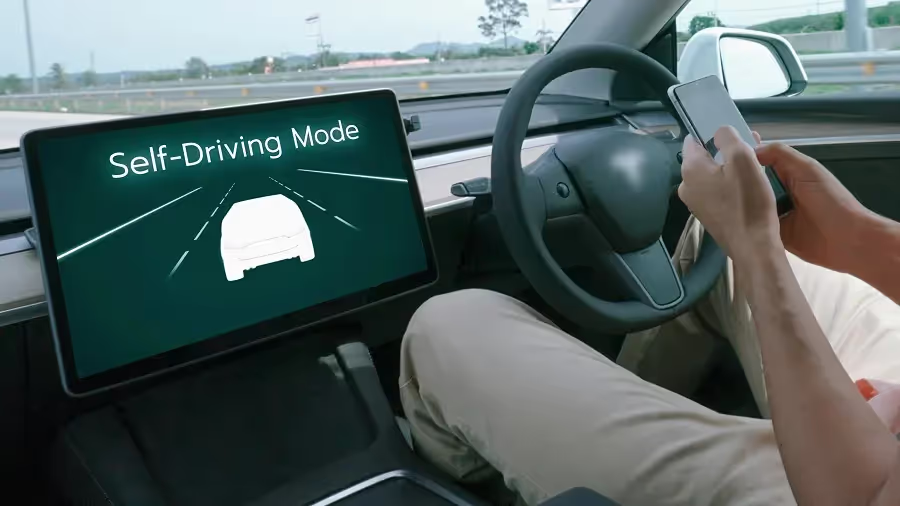
Companies developing the autonomous driving software may be held strictly liable when:
- Programming errors cause the automated system to misinterpret road conditions
- Inadequate testing fails to identify foreseeable risks posed by the technology
- Software updates introduce new safety vulnerabilities
- Failure to implement appropriate remedies for known system limitations
Other Potentially Liable Parties
Additional parties may share responsibility in self-driving car accidents:
- Component manufacturers who supply faulty sensors or hardware
- Maintenance providers who improperly service automated systems
- Government entities responsible for inadequate safety regulations or road maintenance
- Other vehicle operators whose negligent actions contributed to the crash
How Liability Is Determined in Self-Driving Vehicle Accidents
The legal system approaches self-driving car accident liability by examining several key factors:
Evidence Collection and Analysis
Successful liability determination requires a comprehensive investigation including:
- Data from the vehicle's computer systems and sensors
- Analysis of the automated system's decision-making process leading to the crash
- Review of manufacturer safety protocols and testing procedures
- Expert testimony on autonomous vehicle technology and industry standards
Negligence vs. Strict Liability Standards
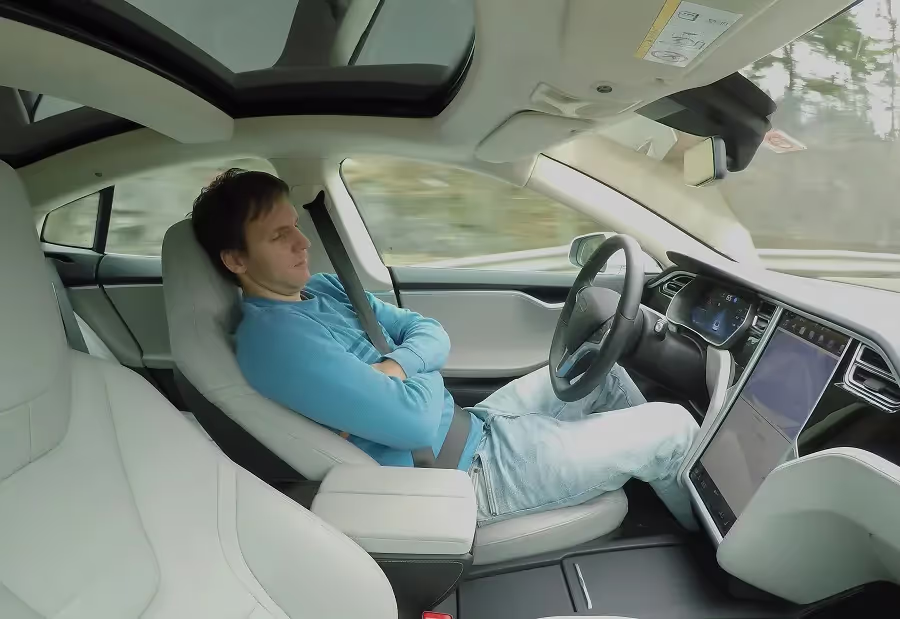
Courts may apply different legal theories when determining fault:
- Negligence standard: Requires proving that the responsible party failed to exercise reasonable care, whether that's the human driver not paying attention or the manufacturer not adequately testing their system.
- Strict liability: Applied to product liability claims against manufacturers, requiring only proof that a defect caused the accident, regardless of whether the manufacturer was negligent.
Comparative Negligence Applications
New York follows a comparative negligence system, meaning multiple parties may share responsibility for an accident. In a crash involving a self-driving car, liability might be distributed between the human operator, vehicle manufacturer, and other drivers based on their respective degrees of fault.
Challenges in Pursuing Compensation for Autonomous Vehicle Accidents in New York
Victims of self-driving car accidents face unique obstacles when seeking compensation:
Complex Legal Precedents
The relative newness of autonomous vehicle technology means limited legal precedents exist for these cases. Courts are still developing frameworks for handling liability questions that didn't exist with traditional motor vehicle accidents.
Technical Complexity
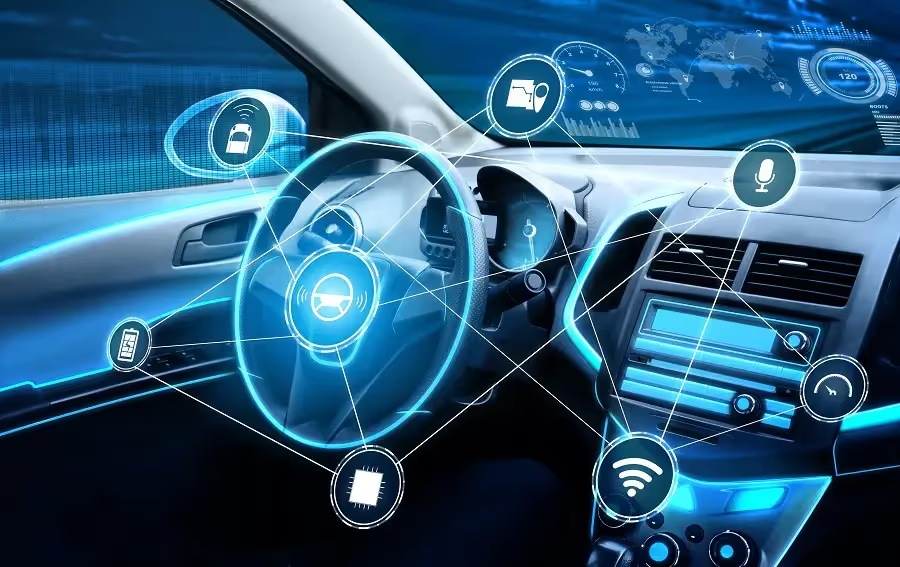
These cases require extensive technical knowledge to:
- Analyze vehicle data and automated system performance
- Understand the capabilities and limitations of specific autonomous technologies
- Identify whether system failures resulted from design flaws or external factors
- Evaluate whether appropriate safety measures were implemented
Insurance Company Challenges
Insurance companies face new complexities with autonomous vehicle claims:
- Traditional auto insurance policies may not adequately address automated system failures
- Determining whether coverage applies to manufacturer defects versus driver negligence
- Coordinating between multiple potentially liable parties and their insurers
Proving Damages and Causation
Establishing that the autonomous vehicle's malfunction directly caused the injured party's damages requires sophisticated accident reconstruction and technical analysis.
New York's Regulatory Framework for Autonomous Vehicles
New York maintains strict oversight of self-driving vehicles through:
State-Level Regulations
The New York State Department of Motor Vehicles requires:
- Special permits for testing autonomous vehicle technology on public roads
- A licensed human driver must remain in the vehicle during testing
- Comprehensive insurance coverage and safety protocols
- Detailed reporting of any incidents or system failures
New York City Requirements
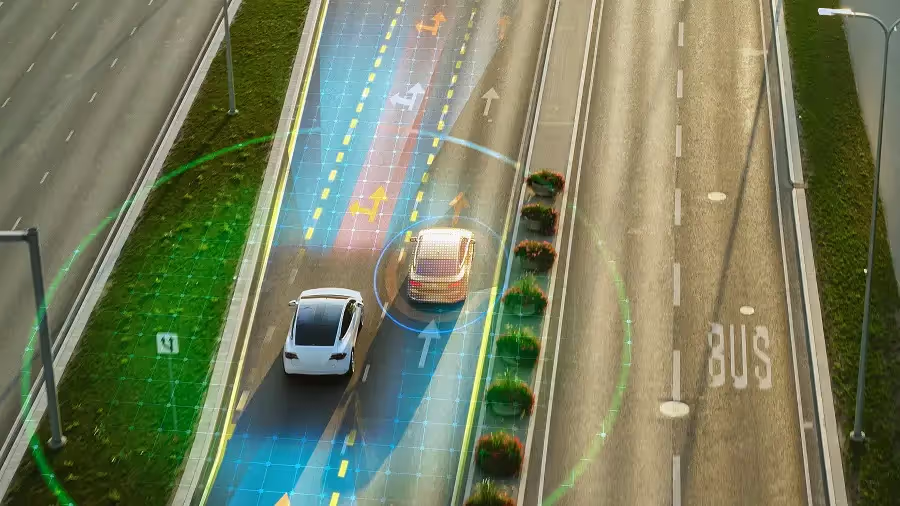
The Departamento de Transporte de la Ciudad de Nueva York ha implementado normas adicionales que requieren:
- Permisos independientes, más allá de la aprobación estatal, para realizar pruebas en la ciudad
- Certificación de que los vehículos de prueba operarán de forma más segura que los conductores humanos
- Planes de ciberseguridad y restricciones geográficas para las pruebas
- Cobertura de seguro mínima de 5 millones de dólares para vehículos de prueba
Futuros desarrollos legislativos
Proyecto de ley S8468 del Senado de Nueva York propone establecer marcos para:
- El despliegue comercial de vehículos totalmente autónomos
- Requisitos de licencia y registro para vehículos sin conductor
- La integración de vehículos autónomos en redes de transporte compartido
- Requisitos de seguridad y protocolos de responsabilidad estandarizados
Preocupaciones actuales sobre la seguridad de los vehículos autónomos
Aunque la tecnología de vehículos autónomos promete una mayor seguridad, las preocupaciones actuales incluyen:
Estadísticas de accidentes
Los datos recientes indican que los coches autónomos tienen tasas de accidentes por milla más altas que los vehículos conducidos por humanos, aunque la gravedad y el tipo de colisiones difieren significativamente. Muchos incidentes ocurren cuando el vehículo automatizado es golpeado por conductores humanos que no anticipan el comportamiento del coche autónomo.
Limitaciones tecnológicas
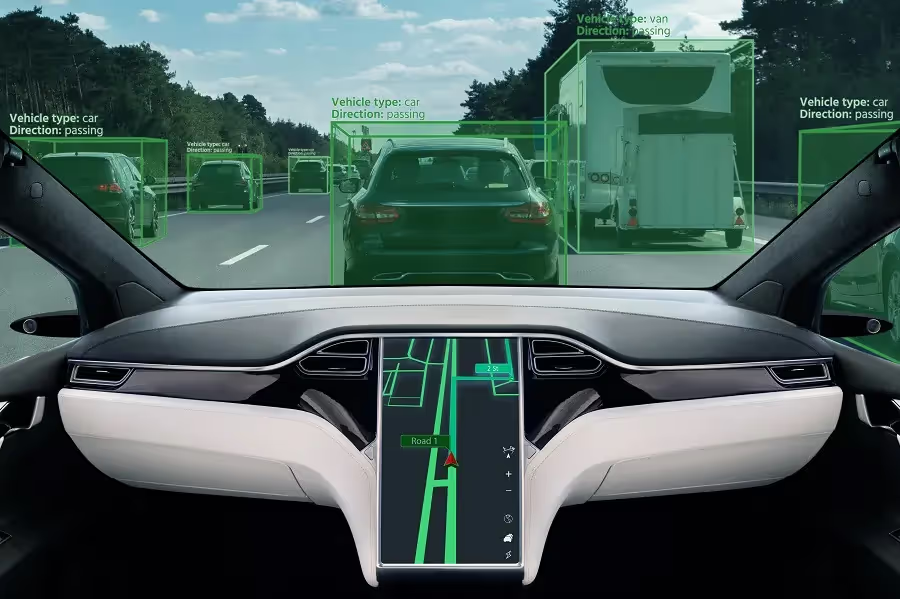
Las limitaciones actuales que afectan a la seguridad incluyen:
- Dificultad para reconocer zonas de construcción y patrones de tráfico temporales
- Desafíos con las inclemencias del tiempo que afectan el rendimiento de los sensores
- Problemas para identificar a usuarios vulnerables de la vía, como peatones y ciclistas
- Limitaciones en entornos urbanos complejos con tráfico intenso
Consideraciones sobre la seguridad infantil y las leyes de asientos de seguridad en NYC
Al hablar sobre la seguridad de los vehículos autónomos, es importante señalar que las leyes de asientos de seguridad de Nueva York siguen siendo plenamente aplicables independientemente del nivel de automatización del vehículo. La ley del estado de Nueva York exige:
- Los niños menores de 2 años deben viajar en asientos de seguridad orientados hacia atrás.
- Los niños de 2 a 4 años deben usar asientos de seguridad adecuados orientados hacia adelante.
- Los niños de 4 a 8 años deben usar asientos elevados (booster seats) hasta que alcancen el tamaño adecuado para los cinturones de seguridad de adultos.
- Todos los sistemas de retención infantil deben cumplir con la Norma Federal de Seguridad de Vehículos Motorizados 213.
Estos requisitos de seguridad son particularmente importantes a medida que las familias comienzan a utilizar vehículos autónomos, incluidos los posibles servicios futuros de robotaxis. Los padres deben asegurarse de que el niño esté correctamente sujeto independientemente de las capacidades de conducción autónoma del vehículo, ya que los sistemas automatizados no pueden reemplazar el uso adecuado de los asientos de seguridad para proteger a los pasajeros jóvenes.
Sus defensores de confianza: Fellows Hymowitz Rice
A medida que los vehículos autónomos se vuelven cada vez más comunes en las carreteras de Nueva York, comprender el marco de responsabilidad se vuelve esencial para todos los usuarios de la vía. La intersección de tecnología avanzada, regulaciones en evolución y la ley tradicional de lesiones personales crea un proceso complejo donde múltiples partes pueden ser responsables de los accidentes. Contáctenos hoy mismo para una consulta gratuita.

Robert L. Fellows
Hable sobre su caso
O llámenos las 24 horas
(845) 639-9300

¿Se lesionó en un accidente automovilístico autónomo? Llame hoy.
En Fellows Hymowitz Rice, le explicaremos las complejidades de estos casos emergentes y lo ayudaremos a superar los desafíos legales para obtener una compensación justa.


